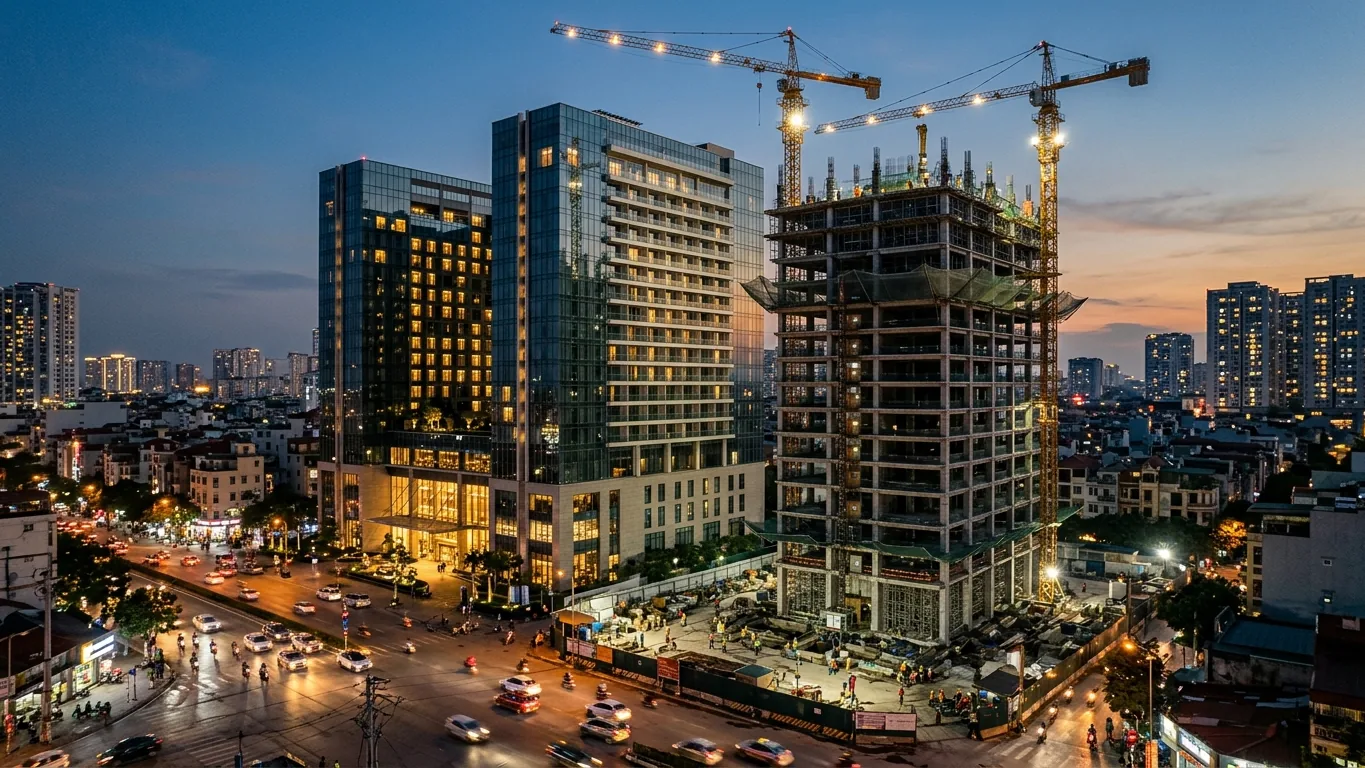
Hanoi is still raising rates, and a much larger room wave is already counted in consultants’ pipelines. According to Savills figures reported by VnExpress, the capital could take in more than 7,000 new hotel rooms from 2027 across about 48 projects. That lands on a market where Savills already tracked more than 11,000 rooms from 66 projects by the third quarter of 2026, with average rates up about 6% year-on-year.
Key facts
| Item | Detail |
|---|---|
| New rooms expected from 2027 | More than 7,000 across about 48 projects (Savills) |
| Tracked supply by Q3 2026 | More than 11,000 rooms from 66 projects (Savills) |
| ADR change | Up about 6% year-on-year (Savills) |
| Near-term Q4 additions cited | About 1,353 rooms from four five-star projects after two central openings |
| 5-star ADR (Avison Young) | About US$230; occupancy 65–70% |
| 4-star ADR (Avison Young) | About US$130; occupancy 68–73% |
| Future supply mix (Avison Young) | About half near-centre; about 11% in the core urban area |
Supply is coming; location will decide winners
The Savills message is blunt: growth continues into the fourth quarter, then the market can “surge” from 2027. Avison Young’s split matters more for underwriting. If only about 11% of future rooms sit in the true urban core, most new keys will fight for demand in near-centre and fringe districts where corporate walkability and embassy traffic are thinner.
That is good news for a handful of well-located Ba Dinh, Hoan Kiem and West Lake assets that can defend rate. It is a warning for large midtown boxes that need citywide leisure to fill midweek gaps. Ageing self-operated hotels without loyalty programmes will feel the pressure first when branded openings cluster.
Rates are up, but profit is not automatic
Savills’ Hanoi investment commentary, as reported, stresses that higher ADR does not equal higher profit if operating costs and acquisition prices rise with it. Avison Young makes the same point from the buyer’s side: strong top-line growth can still produce a poor deal if the entry price is wrong.
Our view: 2026’s 6% ADR lift is a late-cycle gift, not a permanent slope. Owners should bank the rate now, finish deferred renovations before 2027 openings, and pressure-test 2028–2030 budgets on flat occupancy with more competitive set rooms.
What it means for you
1. Owners and asset managers
If your hotel is older than 15 years and unbranded, model a 2027–2029 RevPAR defence plan now. Banquet and corporate accounts will not automatically migrate to new towers, but transient share will.
2. Developers
Near-centre sites need a clearer mixed-use story — residences, wellness, MICE or golf — than a standalone midscale box. Pure room plays look crowded.
3. Brands
The 48-project pipeline is a signing opportunity, but conversion of existing assets may be cleaner than another speculative tower in a soft submarket.
4. Investors
Pay for location and remaining land lease / ownership clarity, not for today’s ADR run-rate. Underwrite the 7,000-room wave as a base case, not a tail risk.
FAQ
How many new hotel rooms could Hanoi add from 2027?
Savills expects more than 7,000 rooms across about 48 projects.
How large is Hanoi’s hotel supply now?
Savills counted more than 11,000 rooms from 66 projects by the third quarter of 2026.
Are Hanoi hotel rates rising?
Yes. Savills reported average rates up about 6% year-on-year, with occupancy also improving.
Where will most new rooms open?
Avison Young expects about half of future supply in near-centre areas, with only about 11% in the core urban districts.