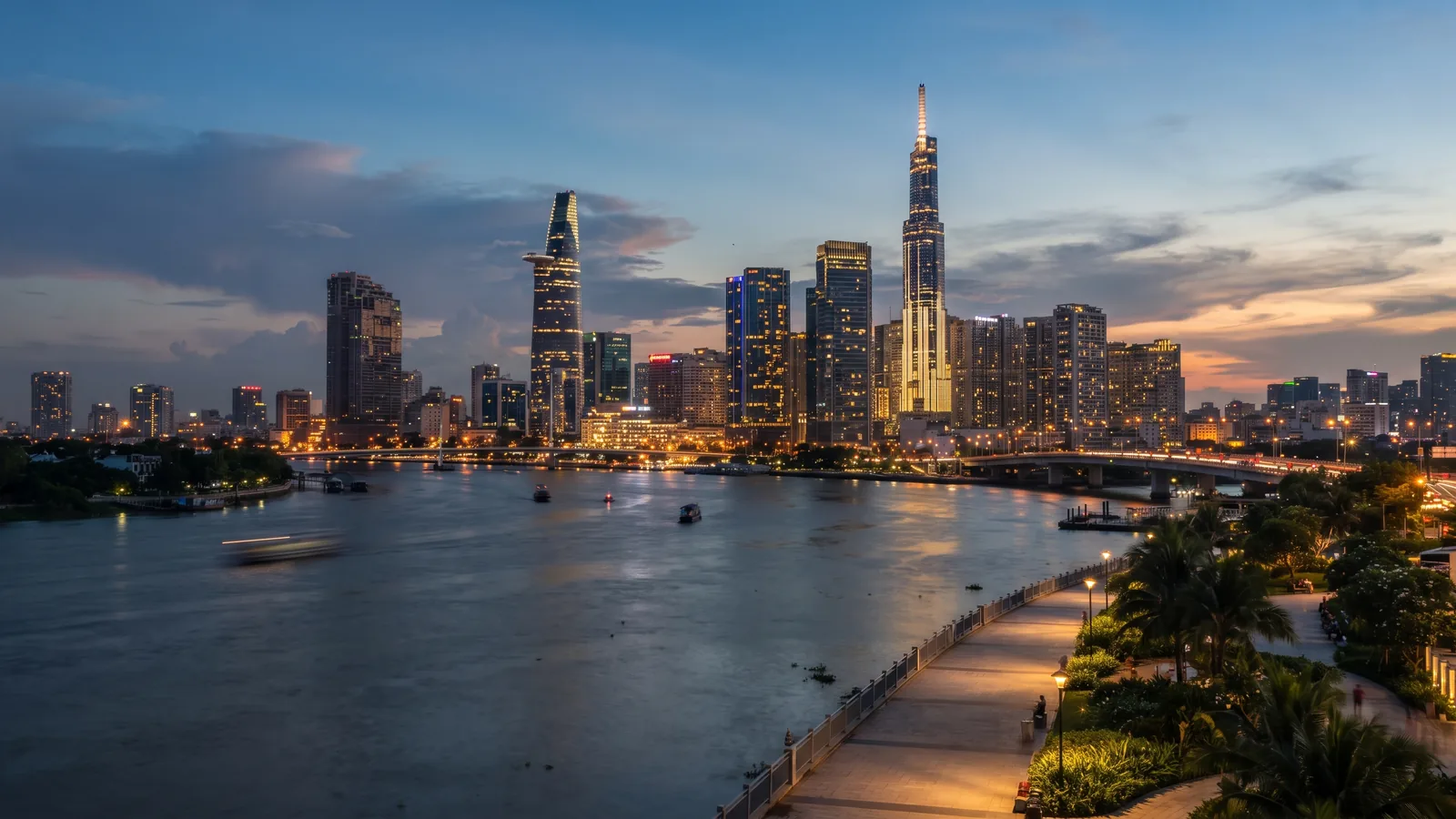
Ho Chi Minh City international visitors reached about 8.52 million in the first nine months of 2026, up 34.5% year on year, according to the city’s Department of Tourism. Domestic visitors fell 5.2%, so the total number of visitors barely moved, by our calculation. Revenue, though, rose 43.4%. That is the real story for hotel owners: the city is earning more from a richer mix of guests, and its tourism leaders now say the measure that matters is nights, spend and repeat visits, not arrivals. For hotels, that means the growth from here has to come from length of stay, groups and events, not from more heads.
Key facts
- International visitors, Jan–Sep 2026: 8,517,428, up 34.5%; 77.4% of the 11 million full-year target.
- Domestic visitors: 39.565 million, down 5.2%; 79.1% of the 50 million target.
- Tourism revenue: VND 282,696 billion, up 43.4%; 85.7% of the VND 330,000 billion target.
- Total visitors: about 48.1 million, roughly flat on a year earlier, by our calculation.
- Large MICE support: a city council resolution, No. 62/2025/NQ-HĐND, supports large international MICE groups; the city recently activated it for a group of 997 guests from China.
- Event calendar: the city plans to publish dates for recurring major events, such as the Ao Dai Festival and the ITE HCMC travel fair, one to two years ahead.
- 2030 targets: 20 million international visitors, 67 million domestic, VND 700,000 billion in revenue and 12% of the city’s GRDP.
What happened
The Department of Tourism’s nine-month figures show a city that has swapped volume for value. International arrivals grew by more than a third, while domestic travel softened.
| Indicator | Jan–Sep 2026 | Change | Share of 2026 plan |
|---|---|---|---|
| International visitors | 8.52 million | +34.5% | 77.4% |
| Domestic visitors | 39.57 million | −5.2% | 79.1% |
| Tourism revenue | VND 282,696 billion | +43.4% | 85.7% |
Source: Ho Chi Minh City Department of Tourism. Note that the city counts visitors to the city, which is a different measure from national international arrivals.
Speaking to Tuổi Trẻ, department director Phạm Huy Bình said awards such as the World Travel Awards help with promotion but do not create visitors on their own. The indicators the city now watches are nights stayed, spend, the services guests use and whether they return. On 27 September, the city won three World Travel Awards Asia titles, including Asia’s Leading Business Travel Destination and Asia’s Leading Festival and Event Destination.
Why it matters
Revenue per visitor rose by about 43%, from roughly VND 4.1 million to VND 5.9 million, by our calculation from the department’s figures. Total visitors were flat. Hotels that rely on domestic weekend and leisure volume are exposed to the 5.2% fall; hotels selling to international, business and group guests are in the growth half of the market.
The full-year plan is now easy. To hit 11 million international visitors, the city needs about 2.48 million in the fourth quarter, or about 827,000 a month. Its January–September average was about 946,000 a month. Revenue needs about VND 47,300 billion more, roughly half the recent quarterly pace. These are our calculations. We expect the city to beat its 2026 international and revenue targets unless demand drops sharply.
What’s next
The fourth-quarter plan, set out by deputy director Lê Trương Hiền Hòa, targets Western Europe, Northeast Asia and North America, more night-economy products, and closer links between the city centre and Vung Tau and Ho Tram for conferences and resort stays. A Ho Tram MICE sales head told Tuổi Trẻ that year-end bookings are rising strongly, led by incentive groups and year-end galas.
Events are the other lever. Ticketed concerts on 17–18 October have already pushed hotel bookings for 16–17 October up more than sevenfold on last year, according to Trip.com, as we report in our concert hotel demand analysis. The city’s tourism development plan to 2030 is due for approval in December, alongside a new support mechanism for tourism products.
What it means for owners and operators
1. Price for spend, not volume
With visitor numbers flat and revenue up, the gains are in rate and ancillary spend. Revenue teams should push length-of-stay offers and packages over pure discounting, and watch domestic weekend demand closely. Strong revenue leaders are in demand, as roles such as director of revenue at Pullman Saigon Centre show.
2. Get on the MICE support list
The city now pays support for large international MICE groups. Hotels with event space should make sure their sales teams and partner agencies know how to apply, and should quote with the support built in. Event sales is a hiring priority, as seen in the search for an event sales manager at Park Hyatt Saigon.
3. Load the event calendar early
If the city publishes major event dates one to two years ahead, owners can set group blocks, minimum stays and rate fences well in advance. Treat the calendar as a revenue input, not a marketing note.
4. Supply is tight, which supports rate
Ho Chi Minh City is adding few new upscale rooms compared with Hanoi and the coast, as we noted in our Minor Hotels analysis. With international demand up a third, existing upscale hotels have pricing power. The risk is complacency on product while rates rise.
FAQ
How many international visitors did Ho Chi Minh City receive in 2026?
About 8.52 million in January–September 2026, up 34.5% year on year and 77.4% of the city’s 11 million target for the year, according to the Department of Tourism.
Will Ho Chi Minh City reach its 2026 tourism target?
On current pace, yes for international visitors and revenue. The city needs about 827,000 international visitors a month in the fourth quarter, against an average of about 946,000 a month so far, by our calculation.
Why did domestic visitors to Ho Chi Minh City fall?
The department did not give a reason in its nine-month report. Domestic visitors fell 5.2% to 39.6 million.
What is Ho Chi Minh City’s 2030 tourism target?
20 million international visitors, 67 million domestic visitors, VND 700,000 billion in tourism revenue and a 12% share of the city’s GRDP.