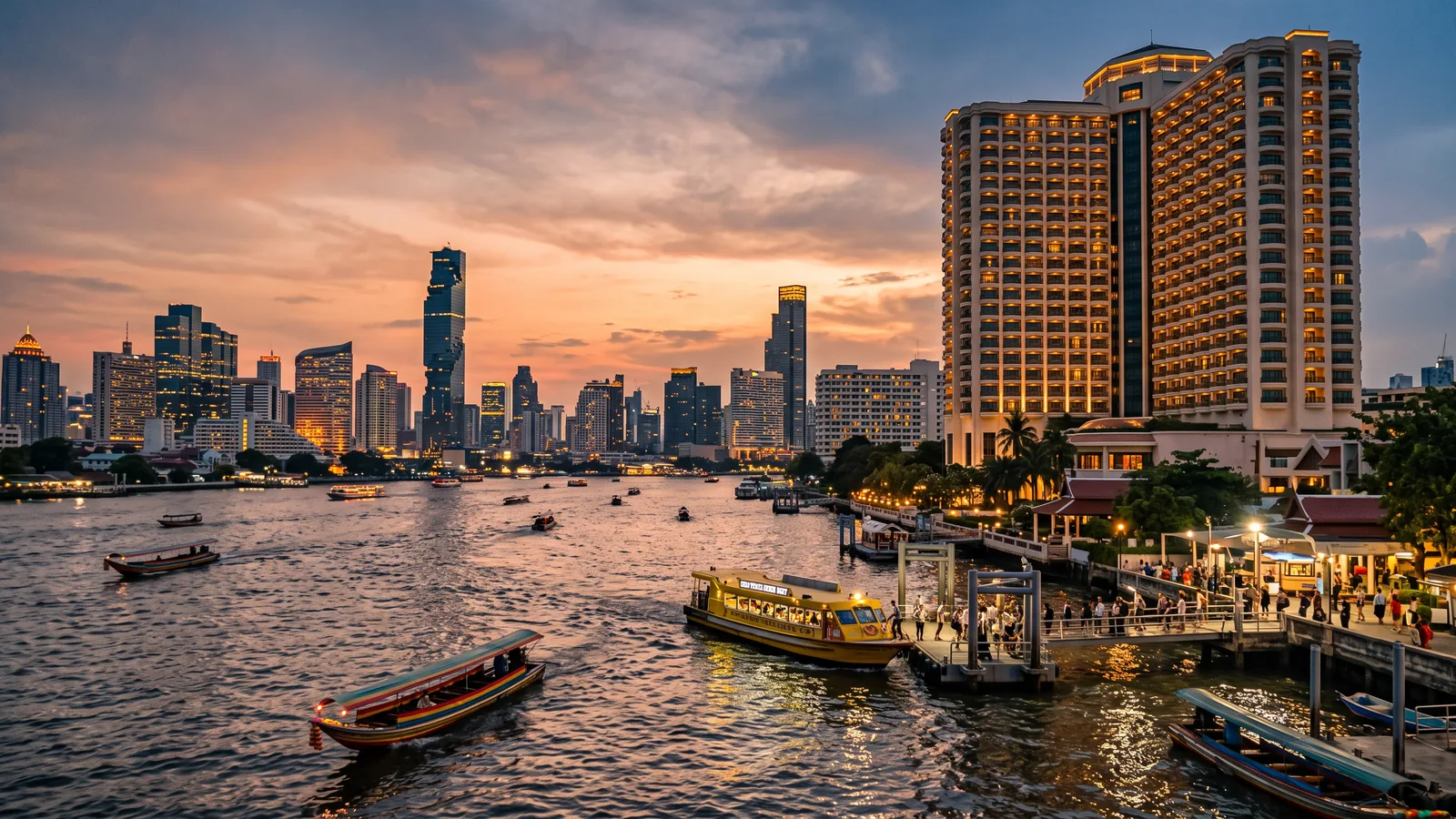
The owner of the Royal Orchid Sheraton, one of Bangkok’s largest riverside hotels, has taken its former owner to court. GROREIT, a real estate investment trust, filed a lawsuit against Royal Orchid Hotel (Thailand) PCL (ROH) on 21 October. ROH sold the 726-key hotel to the trust in 2021, leased it back and promised to buy it back this July. It did not pay, and it has not handed the hotel over. The lawsuit comes five days before unitholders vote on how to sell the hotel, including a THB5.3bn offer from a new bidder. For Thai owners and lenders, this is the first large test of the buy-back REIT, a structure created to help hotel owners raise cash during Covid.
Key facts
- Hotel: Royal Orchid Sheraton Hotel & Towers, 726 rooms and suites, Charoen Krung Soi 30, Bangkok
- Owner: GROREIT (Grande Royal Orchid Hospitality REIT with Buy-Back Condition); REIT manager One Asset Management, trustee MFC Asset Management
- Former owner and tenant: Royal Orchid Hotel (Thailand) PCL (ROH)
- 2021 sale price: THB4.5bn, funded by a THB3.15bn unit offering and a THB1.35bn bank loan
- Buy-back price due 14 July 2026: THB4,873m, excluding VAT
- Lawsuit: filed 21 October 2026 at the Bangkok South Civil Court
- Unitholder vote: 28 October 2026, 2pm, held online
What happened
ROH was meant to buy the hotel back by 14 July 2026, at the end of the fifth lease year. It did not complete the purchase. The REIT manager and trustee say ROH’s buy-back right has now expired. ROH disagrees and says its right is still valid.
After the missed deadline, the trustee told ROH to hand over the hotel within 30 days and asked Starwood, the Marriott company that manages the Sheraton, to act as interim manager. It also asked Government Savings Bank to extend its THB1.35bn loan, which fell due on the same day as the buy-back.
The lawsuit asks the court to order ROH to leave and hand over the property. It also asks for the hotel’s operating agreements, parking lease and business licences to be moved to the trustee, and for unpaid rent from May 2026 with 5% annual interest. The trust has asked the court to make ROH deposit THB25m a month as security until the case ends.
The vote on 28 October
| Option | Buyer | Price | Notes |
|---|---|---|---|
| 1 | ROH | THB4,873m | ROH says it has a backer, subject to due diligence and approvals |
| 2 | Orchid Hospitality Co., Ltd | THB5,300m | Offer made on 4 September |
| 3 | Open auction | Not set | Fallback if options 1 and 2 fail |
The trust manager put all three options to unitholders, as its SET notice sets out. If a sale completes, the trust would be wound up, repay its bank debt and return the rest to unitholders.
What the numbers say
| Price point | THB m | Per key (THB m) |
|---|---|---|
| 2021 sale to the REIT | 4,500 | 6.20 |
| ROH buy-back price | 4,873 | 6.71 |
| Orchid Hospitality offer | 5,300 | 7.30 |
Per-key figures are our calculation on 726 keys. Before the 2021 deal, two valuers appraised the hotel at about THB5.2bn, according to filings at the time.
Our read: the Orchid Hospitality offer is THB427m above ROH’s buy-back price, and about 18% above what the REIT paid in 2021. That gives unitholders a clear reason to prefer a third-party sale. It also gives ROH a reason to fight. If the court accepts that its buy-back right lapsed, ROH loses the hotel it sold and leased back. We could not confirm who is behind Orchid Hospitality.
Why it matters
Thailand allowed buy-back REITs in 2021 so hotel owners could sell assets, keep running them and buy them back after the pandemic. Five-year terms set in 2021 are now ending. The Royal Orchid Sheraton is not the only case. On 15 October, Grande Hospitality REIT, also managed by One Asset Management, sued the tenant of Sheraton Hua Hin Resort & Spa after its lease expired on 11 October. That case names Grande Asset Hotels and Property, ROH’s group, as income guarantor.
The common problem is simple. Many owners expected to refinance and buy back in 2026 at a fixed price. Bangkok’s hotels have recovered, with occupancy around 70% in the third quarter, as our Bangkok Q3 market analysis shows. But raising billions of baht to complete a buy-back is harder than running a busy hotel.
What it means for you
1. Owners in sale-and-leasebacks: the buy-back date is real
A buy-back clause is a deadline, not an option you can roll. Line up the funding at least a year before the date.
2. Investors: distressed does not mean cheap
The REIT has a bid above its buy-back price. Riverside hotels in Bangkok still attract buyers, even mid-dispute.
3. Operators: brands sit in the middle
Marriott, through Starwood, keeps the hotel running while the owner and former owner fight. Management agreements should say clearly who instructs the operator if the lease ends.
4. Lenders: watch the 2021 cohort
Loans made to pandemic-era REITs often mature with the buy-back. Check which hotels in your book face the same date.
FAQ
Who owns the Royal Orchid Sheraton?
GROREIT, a SET-listed real estate investment trust, has owned it since 2021. Royal Orchid Hotel (Thailand) PCL sold it to the trust and leased it back.
Why is GROREIT suing ROH?
ROH did not buy the hotel back by 14 July 2026 or hand it over when the lease ended. The trust wants the property back, unpaid rent and damages.
When is the GROREIT unitholder vote?
On 28 October 2026 at 2pm, held online.
How much has been offered for the Royal Orchid Sheraton?
Orchid Hospitality Co., Ltd has offered THB5,300m. ROH says it can pay THB4,873m, subject to its backer’s checks.
Is the Royal Orchid Sheraton still open?
Yes. The hotel continues to trade under the Sheraton brand, managed by Marriott.