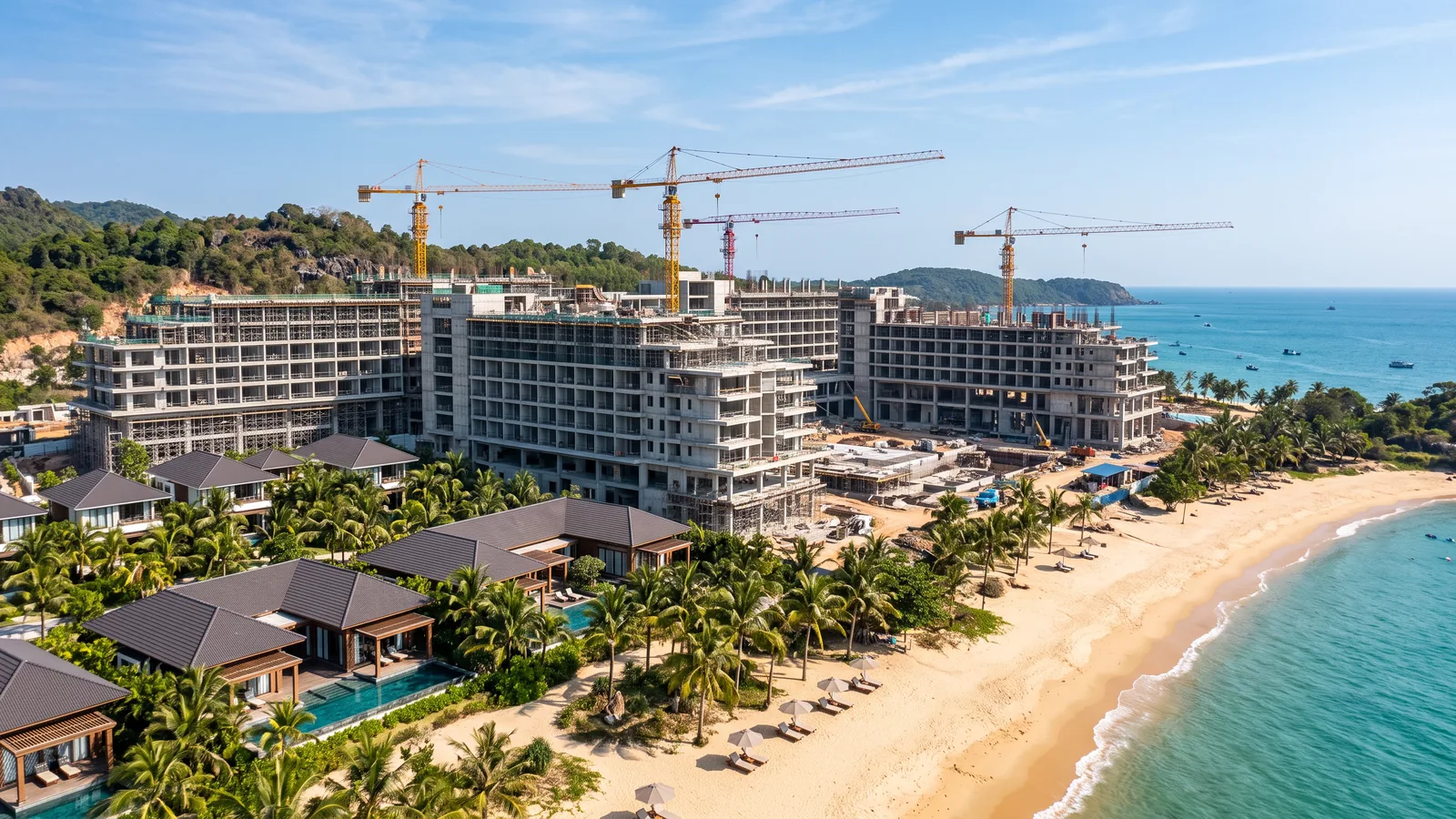
Umana Bali, the 72-villa clifftop resort at Ungasan run by Hilton under its LXR brand, is about to have a simpler owner. Its parent, PT Surya Semesta Internusa Tbk (SSIA), will merge PT Ungasan Semesta Resort and PT Indo Indah into PT Sitiagung Makmur from 1 January 2027, according to the merger summary reported by The Econopost. The summary also shows the resort still made an operating loss in the first seven months of 2026. For owners, the deal says less about SSIA’s plans than about how hard it is to make a new luxury villa resort pay.
Key facts
| Item | Detail |
|---|---|
| Resort | Umana Bali, LXR Hotels & Resorts, Ungasan |
| Villas | 72 (Hilton) |
| Opened | November 2023 |
| Listed owner | PT Surya Semesta Internusa Tbk (SSIA) |
| Surviving company | PT Sitiagung Makmur (SAM) |
| Merging in | PT Ungasan Semesta Resort (USR), PT Indo Indah (IDAH) |
| Effective date | 1 January 2027 |
| Revenue, 7 months to July 2026 | Rp124.89bn (pro forma) |
| Gross profit | Rp84.49bn |
| Operating loss | Rp4.34bn |
| Net loss, pro forma | Rp52.72bn (Rp24.66bn before merger adjustments) |
Three companies, one resort
The structure is common in Indonesian hotels. USR operates Umana Bali through its agreement with Hilton. IDAH leases villas to USR to run as hotel rooms. SAM leases villas and supporting facilities to USR. In effect, the resort’s revenue sits in one company and much of the property in two others, with leases running between them.
After the merger, SAM takes over all assets and liabilities of USR and IDAH, which cease to exist without liquidation. SSIA says the aim is faster decisions and lower administrative and operating costs. Staff of USR and IDAH move to SAM, and no layoffs are planned.
The boards approved the plan on 28 October, and the summary was published on 2 November. A circular resolution in place of an extraordinary shareholders’ meeting is planned for 16 December, with the merger deed signed the same day. Third-party consents, where needed, are still to be settled.
What the numbers show
The pro forma figures cover the seven months to 31 July 2026 and the balance sheet on that date.
| Before merger | Pro forma after merger | |
|---|---|---|
| Total assets | Rp493.06bn | Rp465.41bn |
| Total liabilities | Rp362.23bn | Rp362.64bn |
| Total equity | Rp130.83bn | Rp102.77bn |
| Revenue (7 months) | Rp124.89bn | Rp124.89bn |
| Operating loss | Rp4.34bn | Rp4.34bn |
| Net loss | Rp24.66bn | Rp52.72bn |
Revenue and the operating line do not change, because the merger does not change the business. The larger net loss and lower equity are accounting adjustments from the merger, not a worse trading result.
Revenue of Rp124.89bn over 212 days across 72 villas is about Rp8.2m per villa per day, by our calculation. That includes food, beverage, spa and events, so it is not a room rate. The gross margin is about 68%. Even so, the resort lost money at the operating level. The gap between the operating loss and the net loss points to costs below the operating line, such as interest on about Rp362bn of liabilities; the summary does not break them out.
Our view: the seven months include Bali’s peak season in July. An operating loss on that base suggests the resort is still in ramp-up, close to three years after opening, or carrying heavy overheads for its size.
Why it matters in south Bali
Bali is adding mostly five-star rooms (see our report on Bali’s luxury pipeline), and star-hotel occupancy slipped to 66% in September (see Bali hotel occupancy). The Bukit’s clifftop villa resorts, such as The Edge Bali and Six Senses Uluwatu, compete for the same small pool of high-spending guests.
Listed Indonesian owners are also reshaping Bali assets in different ways. Jayakarta’s owner chose to sell land instead; see our report on the PNSE Bali land sale.
What it means for you
1. Owners with split structures
Lease chains between group companies add cost and paperwork. If your resort’s revenue and assets sit in different companies, check whether merging them would cut tax and administration costs.
2. Investors in villa resorts
Ask for results at the operating line, not just revenue per villa. Umana’s 68% gross margin did not stop an operating loss.
3. Lenders
A merger puts all assets and debts in one company. That can make security simpler, but check that existing lease and loan terms survive the change.
4. Operators
Hilton’s management contract sits with USR today. The deal needs third-party consents where required, so expect the agreement to move to SAM.
FAQ
Who owns Umana Bali?
PT Surya Semesta Internusa Tbk (SSIA), through its subsidiaries. From 1 January 2027 a single company, PT Sitiagung Makmur, will hold the business.
Who runs Umana Bali?
Hilton, under its LXR Hotels & Resorts brand.
How many villas does Umana Bali have?
72 villas, on the clifftop at Ungasan.
Is Umana Bali profitable?
Not yet at the operating level. Pro forma figures show an operating loss of Rp4.34bn in the seven months to July 2026.
Will staff lose their jobs in the merger?
SSIA says no. Employees of the two merging companies will move to PT Sitiagung Makmur.