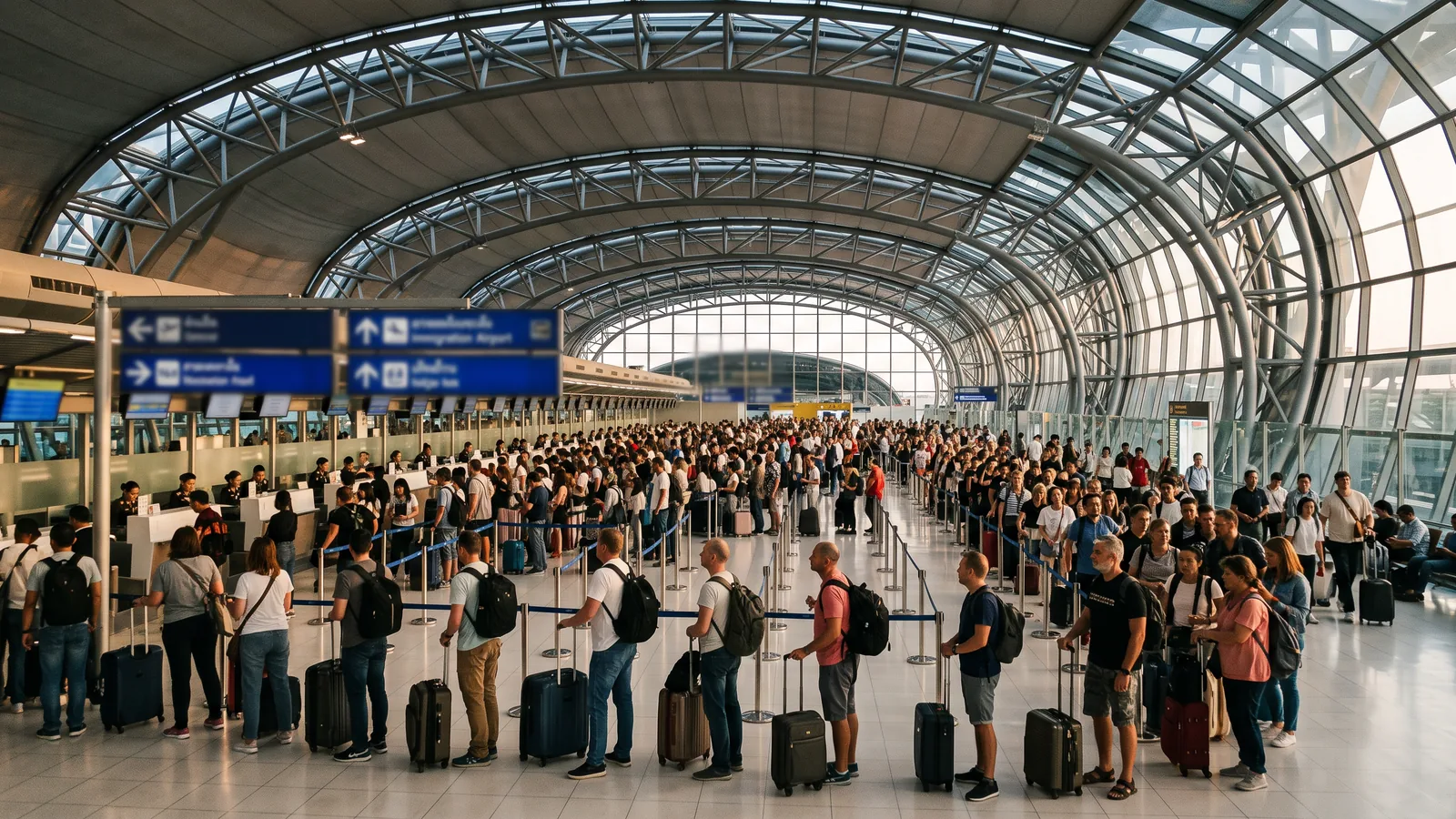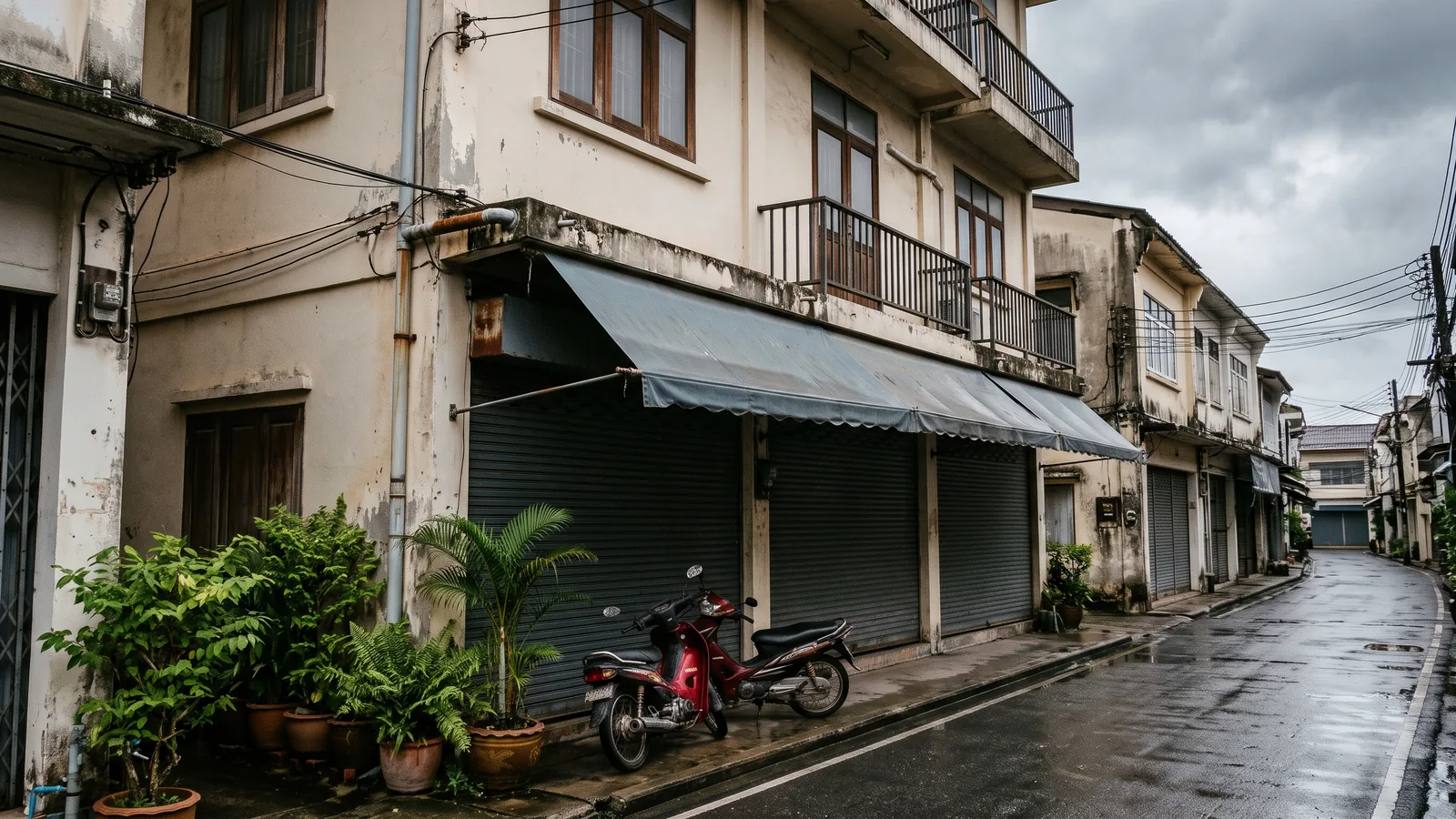
Thailand hotel closures are rising, and the cause is clearer than the headline. Kasikorn Research Center (KResearch) said on 26 October that 148 hotel and accommodation businesses registered their closure in the first nine months of 2026, up 42% on a year earlier. About half of operators lost money in 2025. But Thailand’s market is still growing in value. The real problem is that the country has 11.7% more rooms than in 2019 while foreign arrivals are about a fifth lower. For owners, especially of small hotels, that means fewer guests per room and more pressure on rate.
Key facts
| Measure | Figure |
|---|---|
| Closures, Jan to Sep 2026 | 148 businesses, up 42% year on year |
| New registrations, Jan to Sep 2026 | 779, down 31.2% |
| Operators with a loss in 2025 | About 51% (54% of small operators) |
| Operators with losses three years running (2023–2025) | 38% |
| Rooms, first half of 2026 | About 876,000, up 3.4% on end-2025 and 11.7% on 2019 |
| Foreign arrivals, 2026 forecast | 31.4 million, down 4%, about 79% of 2019 |
| Overnight visitors per room | 249 in 2019, 228 in 2026 |
| Occupancy, Jan to Sep 2026 | Up 0.18% year on year; down in 19 provinces |
| ADR, 2026 forecast | Down about 0.8% |
| Market value, 2026 | About THB1.1 trillion, up 2.6% |
All figures are KResearch’s, as reported on 26 October 2026.
What happened
KResearch’s numbers describe a market that is getting bigger but less profitable. Revenue is still rising, helped by meetings and domestic travel. But occupancy is flat nationally and falling in 19 provinces. Foreign arrivals are down 4% this year, and 18 important source markets, including China, South Korea and Japan, were still below 2019 levels in 2025.
Supply kept growing. Rooms rose in 64 provinces, with new rooms in Bangkok, Phuket, Surat Thani and Chiang Mai in every price band. Short-term rentals add more: AirDNA data cited by KResearch counts about 50,000 rental units in Bangkok, Phuket, Chonburi, Chiang Mai and Surat Thani, equal to about 10% of registered rooms in those markets, running at about 60% occupancy.
KResearch expects 31 million to 33 million foreign visitors in 2027 and national occupancy of between 69.58% and 71.69%. It warns that variable costs, 40% to 45% of expenses, could rise with energy, food and online travel agency fees.
Our read: a supply problem, felt by small owners
The closure number sounds dramatic, but it needs context. 148 closures against 779 new registrations means the number of businesses is still rising. This is not a collapse. It is a shake-out at the small end.
The ratio that matters is guests per room. Overnight visitors per room fell by about 8% between 2019 and 2026, by KResearch’s estimate. When demand per room falls, the weakest hotels cut rate to fill, and the whole market’s rate drifts down. That is why KResearch expects ADR to fall this year even as revenue rises.
It also fits what we reported on Thailand’s high season splitting by star rating: four- and five-star hotels are booking well, while three-star and below are not. And it adds weight to the hotel association’s worry about the draft Accommodation Act, which could bring thousands of informal rooms into the legal market just as small licensed hotels are losing money.
What it means for you
1. Small hotel owners: decide before 2027, not during it
KResearch expects a tough 2027 with costs rising. If your hotel has lost money for three years, compare the options now: a management or franchise contract, a change of use, or a sale while buyers are still active.
2. Investors: the pipeline of sellers is growing
Closures and three-year losses point to more small hotels for sale in Phuket, Bangkok, Chiang Mai and Surat Thani. Underwrite on today’s rate, not on 2019’s.
3. Operators and brands: there is a conversion market
Owners with sound buildings but weak distribution need sales, systems and loyalty. Soft brands and white-label management can win these contracts.
4. Developers: check rooms per guest, not arrivals
KResearch’s own advice is to assess local supply before investing. In markets where rooms have grown faster than overnight visitors, new projects need a clear reason guests will choose them.
FAQ
How many hotels closed in Thailand in 2026?
148 hotel and accommodation businesses registered their closure from January to September 2026, up 42% on the same period of 2025, according to KResearch.
Why are Thai hotels closing?
Weak and uneven foreign demand, more rooms than before the pandemic, competition from short-term rentals, and higher costs. Small operators are hit hardest.
How many hotel rooms does Thailand have?
About 876,000 hotel and accommodation rooms in the first half of 2026, according to KResearch, 11.7% more than in 2019.
What is the outlook for Thai hotels in 2027?
KResearch expects 31 million to 33 million foreign visitors and national occupancy between 69.58% and 71.69%, with costs likely to rise.